NHA Membership Now is an exciting time to be part of the Naval Helicopter Community!
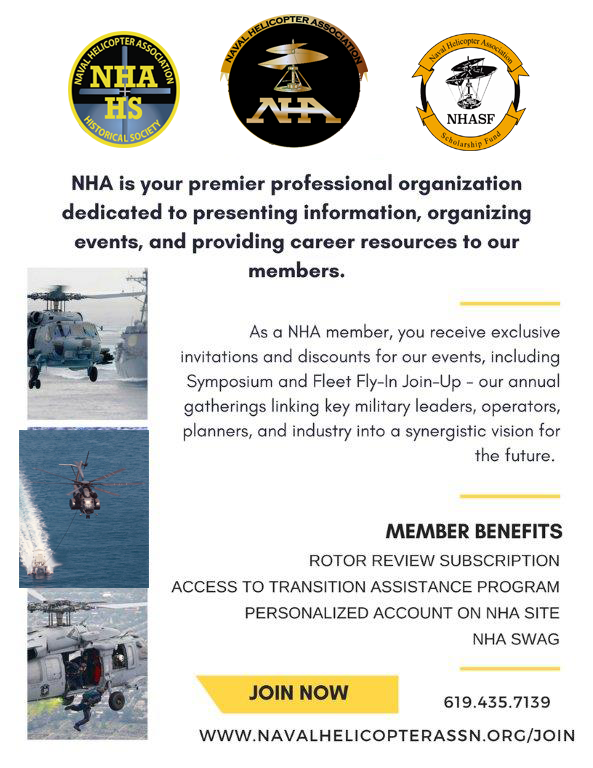
NHA is your member-based non-profit organization open to anyone interested vertical lift aviation. Our membership is mainly comprised of active duty and retired USN, USMC, and USCG helicopter pilots, aircrew, and maintenance professionals. As the fastest growing community of Naval Aviation, with nearly ½ of naval air assets directly related to rotary wing, NHA is the premier professional organization dedicated to presenting information, organizing community social events, and providing career resources to our members. Your membership includes: NHA Provides professional and social functions in each region, with exclusive access to the annual events Symposium and events during Gulf Coast Fleet Fly-In. NHA Symposium is an annual gathering linking key Military leaders, operators, planners and industry into a synergistic vision of the future. Each year, we sponsor multiple individual, crew, and corporate awards for excellence in rotary wing aviation and maintenance. NHA also offers scholarships to undergraduate and graduate students. Rotor Review MagazineA subscription to Rotor Review magazine is included in your annual membership and is available in both print (when available) and digital. The magazine content includes articles and photographs about unit activities, new developments in rotary wing aviation, and special features of professional interest. The articles are all sharable and readable on your mobile device. NHA Membership2 Year "Nugget" Membership, Enlisted (E-1 thru E-4), Active Duty Only: $15 Open to E1-E4 on first tour. Includes 2 years of membership Nugget Enlisted (E1-E4), Active Duty Only (Lifetime Membership: $75) Enlisted, Active/Selective Reserve/Former/Retired(E1-E6) 1 Year Membership: $15 3 Year Membership: $45 5 Year membership: $75 Lifetime Membership: $100 Age 85 or older: Free-Contact NHA Office Enlisted, Active/Selective Reserve/Former/Retired(E7-E9) 1 year membership: $15 3 year membership: $45 5 year membership: $75 Lifetime Membership: $150 Age 85 or older: Free-Contact the NHA Office Officer, Active/Former/Retired/Civilian 1 Year Membership, Officer, Active, Reserve, Selres, FTS, Retired, Civilian, Institution Only: $40 2 Year "Nugget" Membership, Officer, Active Duty Only: $40 3 Year Membership, Officer, Active, Reserve, FTS, Selres, Retired, Civilian Only: $110 5 Year Membership Officer, Active, Reserve, FTS, Selres, Retired, Civilian Only: $175 Lifetime Membership, Officer, Active Duty Only: $700 Lifetime "Nugget" Membership, Officer, Active Duty Only: $500 Lifetime Membership, Officer, FTS, Selres Only: $500 Lifetime Membership, Officer, Active Reserve, FTS, Selres, Retired, Civilian Age 59 and younger: $500 Lifetime Membership, Officer, Active, Reserve, FTS, Selres, Retired, Civilian Age 60 and older: For Tiers below, contact the NHA Office: Age 60 to 65 Special Price $450.00 Age 66 to 70 Special Price $400.00 Age 71 to 79 Special Price $300.00 Age 80 to 82 Special Price $ 75.00 Age 83 to 84 Special Price $ 40.00 Age 85 = FREE
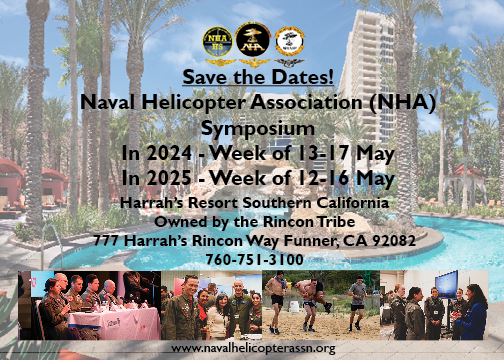
All NHA Officer/Civilian Members who are currently 3 or 5 Year members and all NHA Retired Members older than age 60, must call in to elect Lifetime Membership. All 3 and 5 Years members will be given pro-rated credit (depending on what window you are in with your 3 or 5 Year membership) for their membership fees already paid against their Lifetime Membership based on NHA Member type. This has to be handled manually by the NHA Office. All NHA Members who wish Lifetime Membership but would like to spread the cost over 4 equal payments within 1 year period, must call and arrange this with the NHA Office. All others may elect to renew using the rates for their category online. NHA Events NHA members have access to both national and regional events including the annual Symposium and Gulf Coast Fleet Fly-In/Join Up. Members receive discounted admission and access to online preregistration. Member Only Access
CLICK HERE TO JOIN |
Our Sponsors

The Spring 2024 issue of Rotor Review "Be Ready" is here!
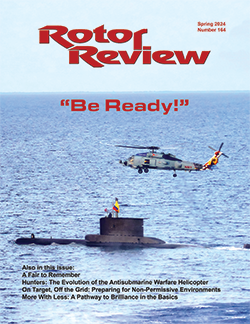
The Spring issue of Rotor Review in sync with the NHA ’24 Symposium looks at ADM Aquilino laconic and now iconic instruction “Be Ready.” In VADM Hughes’ On Leadership piece he addresses not just equipment readiness, or strategy, but more importantly, the mindset of the warfighters and the folks who support them.
The Commodore Corner by Col. David Fitzsimmons, USMC, Commander Marine Aircraft Group 29 considers the logistics of readiness. From the Coast Guard we have an amazing example of CRM at work with multiple assets achieving a successful rescue under challenging conditions. Read about the Turtle in very early ASW. There are squadron updates, a book review, advice on how to get published and Symposium ’24 information. Be Entertained, Be Informed. Be NHA.